3D printing for interiors in Dubai: decor, hardware and design elements
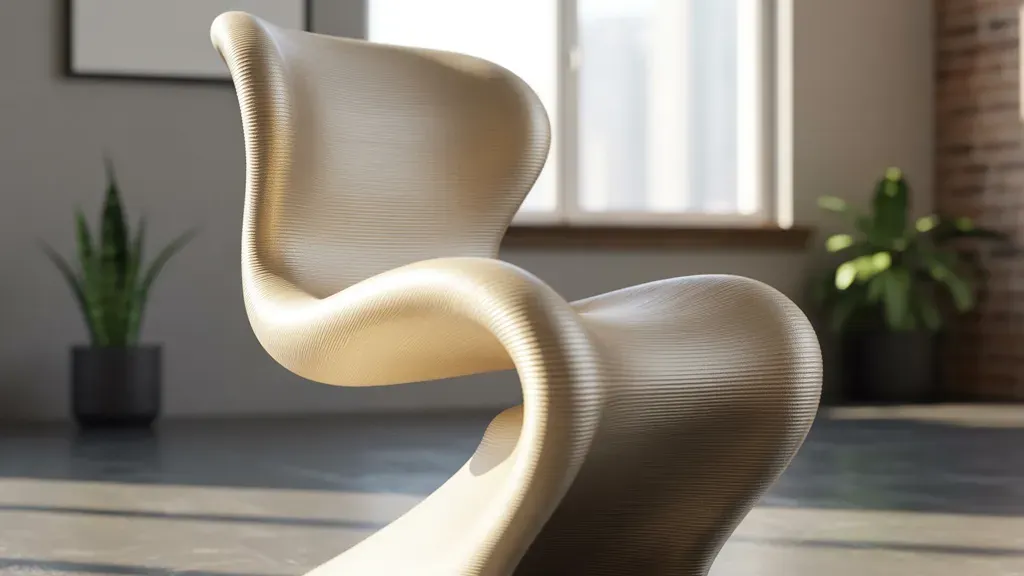
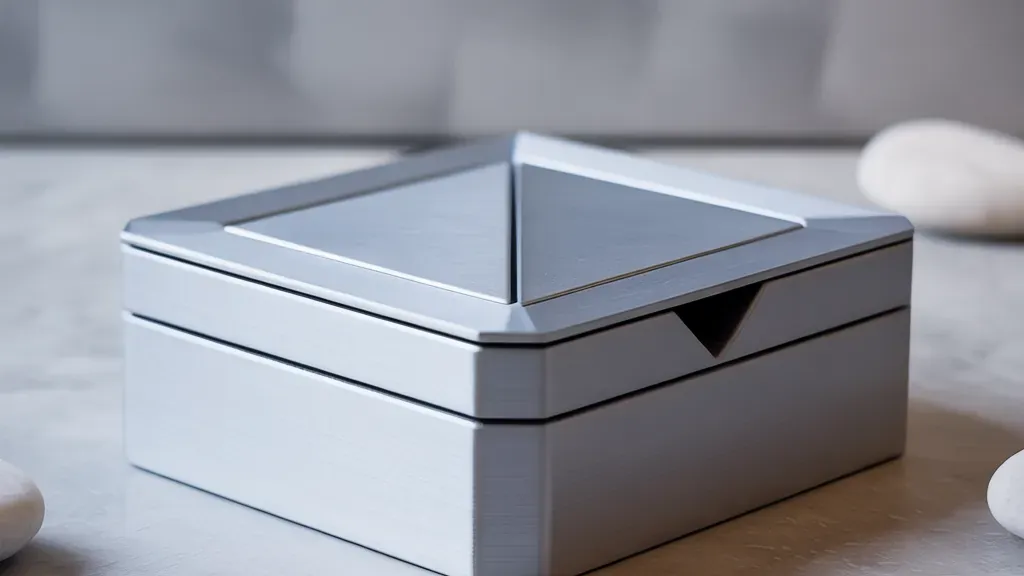
3D printing for interiors earns its place when the piece is decorative, light enough to carry up a stair, and needed in a quantity no joiner will quote sensibly. Perforated screens, lamp shades, hardware, repeating ornament and display objects come off an FDM or SLA machine as plastic parts, then get filled, sanded, primed and painted to match the room. One boundary first: we do not build the room. Your contractor does the walls, the joiner does the carcass, we make the objects that sit on them.
The ceiling on what plastic can do in a Dubai interior is higher than most designers assume. The MYATA Platinum lounge at City Walk was assembled from more than 21,700 printed components across 23 canyon-like forms, run on 158 machines and finished in textured paint, and it took a Guinness World Record in February 2025 (Hospitality Design). Someone else's project, not ours. Next to it, forty matching handles is a small ask.
What most decor guides skip is the thing that decides whether your piece survives its first August. PLA, the material behind most printed decor online, softens at temperatures a Dubai interior reaches without trying: direct sun through glass, a villa left with the AC off during handover, a surface sitting flush against anything warm.
Interior pieces worth printing
Printing wins on particular shapes rather than on furniture in general.
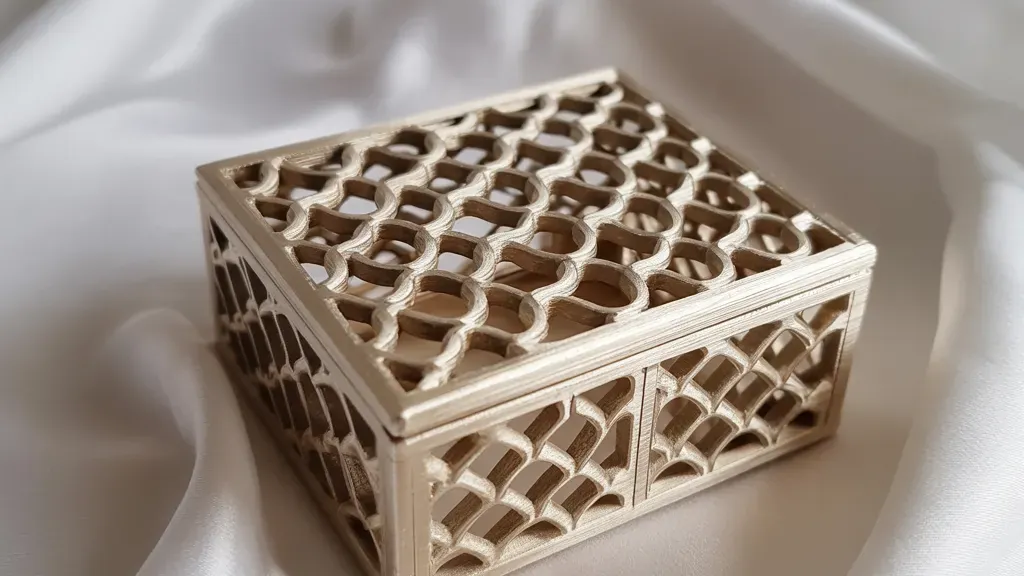
- Decorative panels, perforated screens and grilles, where a router needs a new jig for every variation.
- Lamp shades and diffusers, including geometry no mould could release.
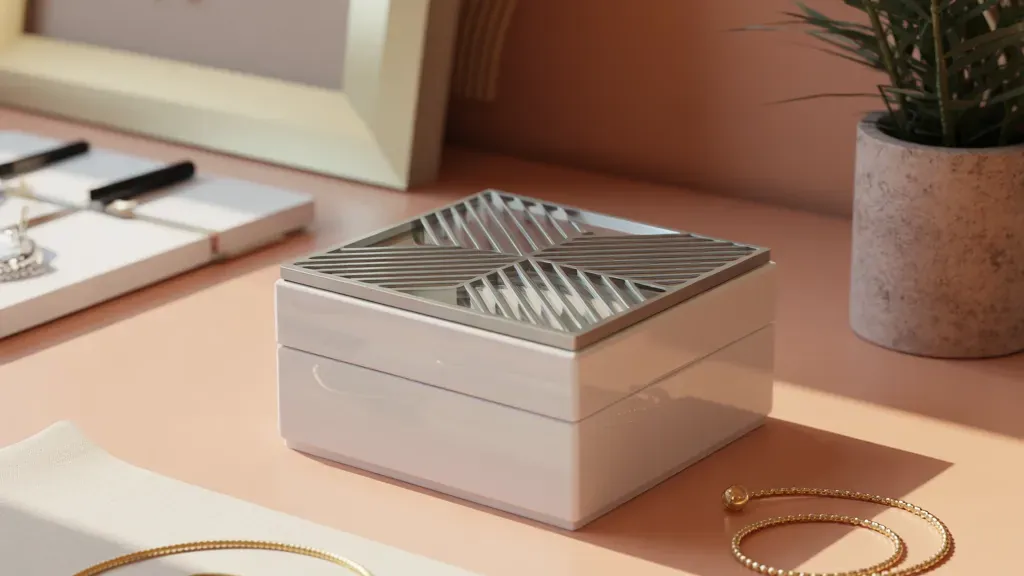
- Door, cabinet and wardrobe hardware: pulls, finger plates, escutcheons, back plates with a custom hole pattern.
- Repeating ornament and relief: rosettes, capitals, mouldings, motifs that cost real money in plaster or carved timber.
- Plinths, risers, display mounts and bespoke objects for a shelf or a shop window.
Size rarely stops us. We print from roughly 5 cm up to constructions around 15 m, and anything bigger than a build chamber is cut into sections and assembled into one object. Where the seam falls is a design decision, not a printer accident. Splitting and bonding are covered in our piece on large pieces printed in sections.
Material under the UAE climate
PLA has a glass transition around 60°C and a heat deflection range of roughly 50 to 60°C. PETG moves at about 80°C, ABS around 105°C, and ASA sits near 95 to 100°C with genuinely good UV stability, because its acrylic rubber phase carries no double bonds for ultraviolet to attack (filament comparison, 3DPrintBook).
Those numbers turn into site decisions fast. A panel on an internal wall in a conditioned villa is fine in PLA. The same panel on glazing facing west is not: sun through glass takes a dark surface well past room temperature, and PLA chalks and goes brittle under UV. The quieter case catches more people: a handover-stage apartment with the AC off for three weeks in August.
A fitting is a heat source in its own right: an LED heat sink can run above 60 to 70°C, already past PLA's softening point (LiteOn LED). Material choice for anything sitting that close to a lamp is its own question, so we ask for the lamp type and wattage before quoting the piece.
SLA resin handles the small end: layers around 0.025 to 0.05 mm give crisp relief on fine ornament, where FDM layer lines would read as damage. Resin is brittler and less happy in daylight, so those parts stay out of windows and get sealed under paint.
Weight, wall thickness and fixings
A printed piece is hollow, and the difference is not marginal. A 40 by 40 cm panel with 15 mm of relief is about 2,400 cm³ solid, close to 3 kg in PLA at 1.24 g/cm³. Printed as a 2 mm shell with internal ribs it lands near 470 cm³, so under 600 g. One version needs a structural fixing, the other needs two plasterboard anchors.
Thin is not free, though: a 2 mm shell over a 40 cm span flexes like a car door panel with nothing behind it, which is why the ribs go on a grid and the perimeter gets thicker.
Hardware has the opposite problem. A pull takes hand load, and FDM is weakest along Z, where layers are bonded rather than continuous. So a handle is oriented with the load across layers, near-solid at the stems, usually with a brass insert so the screw bites metal. For a plate bolting to an existing door, send the hole centres and the first plate gets printed as a test fit.
Fixings get specified from the real weight, so we weigh the finished piece and give you the number. One more site habit: a 1.5 m printed trim in a room that swings from 22°C under AC to the mid thirties without it moves more than the gypsum behind it, so fix one end and let the other float.
Runs of identical parts
A joiner prices setup. Thirty small identical parts mean a jig, a test piece and hand finishing on every relief. Printing prices material and machine hours, so part thirty costs close to what part two cost, and the file does not care how complicated the pattern is.
An import order prices MOQ, freight and time. Forty handles in a custom finish means tooling or a minimum you do not need, and then shipping and clearance own your date.
Each project is quoted after we see the file. As a market reference point, Orbit3D in Dubai publishes AED 0.13 to 0.30 per gram for FDM plastics, around AED 0.50 per gram for SLA resin, and machine time from AED 50 to 100 per hour (orbit3d.ae). Their published figures, not ours. On our side the number comes from material volume, height in the machine, layer height, support, hand finishing before paint, and the number of copies.
From your file to the finished piece
What we need from you, in order of how much time it saves:
- A 3D file. STEP or IGES is ideal, STL or OBJ is fine. State the units.
- The dimension that is fixed: hole centres, fitting diameter, the module that has to tile.
- Where it goes and what is around it. Sun, AC, the lamp, the substrate.
- A finish reference: paint code, sample, or a photo of the adjacent material.
- The count and the site date.
No 3D file is not a blocker: a dimensioned sketch or a photo of the original part gets us to a quote and then to a model.
Then the stage designers underestimate. Raw FDM shows its layers, and geometry decides how badly: at 0.2 mm layers a surface sloping 10° off horizontal shows a tread about 1.1 mm wide, so a shallow dome reads as contour lines. A paint-ready surface typically takes three or four rounds of filling, sanding and priming, and grey primer shows what the eye missed. On a visible piece that stage often takes longer than the printing. Full sequence in our article on sanding, priming and painting printed parts.
Lead time against a handover date
We do not quote a day count before seeing the file. What moves the schedule: overall size, since a sectioned piece is several prints plus assembly plus seam work; the number of copies; and the finish level, because a matte panel and a gloss show piece are different amounts of hand labour.
Order the test piece when the design is signed, not when the site is ready: a hole pattern that misses the door is cheap to fix in week one and expensive in the last. Freeze the paint reference early, since recoating a finished batch means sanding back. And give us the real site date, because printing can run overnight while sanding and painting cannot.
Send a file or a sketch through the contact form or on WhatsApp at +971 56 370 4404.
FAQ
Which printed pieces hold up in Dubai heat and sun?
Anything in a conditioned space is straightforward. For direct sun through glass, a balcony threshold, or a space left unconditioned for weeks, PLA is the wrong material: heat deflection around 50 to 60°C and real UV degradation. Paint and primer help, since an opaque coating takes the UV hit first.
Which material should I ask for if the piece sits right under a light?
Give us the fitting and the wattage instead of guessing at a material. An LED heat sink can run above 60 to 70°C, already past PLA's softening point, so a shade clamped straight to a hot fitting sags over time. Material near a light source is its own question, and we check the lamp before quoting anything in PLA.
How do I send a file, and what makes a file printable?
STEP, IGES, STL or OBJ, with the units stated. A printable file is a closed solid with real wall thickness and the critical dimension marked. Without a 3D file, a dimensioned sketch or a photo of the existing part is enough to start.
Does a printed piece need painting?
Not always. A dark grey PETG planter or a hidden bracket goes straight to site. Anything a client stands next to and touches gets filled, sanded, primed and painted, and that work is usually the larger half of the job.
When is printing cheaper than a joiner or a small import order?
When the geometry is complex, the quantity is awkward, or the date is tight. Printing charges material and machine hours with no tooling, so thirty patterned handles stay flat per unit and a revision happens in the same week. A plain slab or a simple box is still cheaper from the joiner, and anything structural is not ours at all.