
Silicone mould masters from a 3D print: casting a small batch
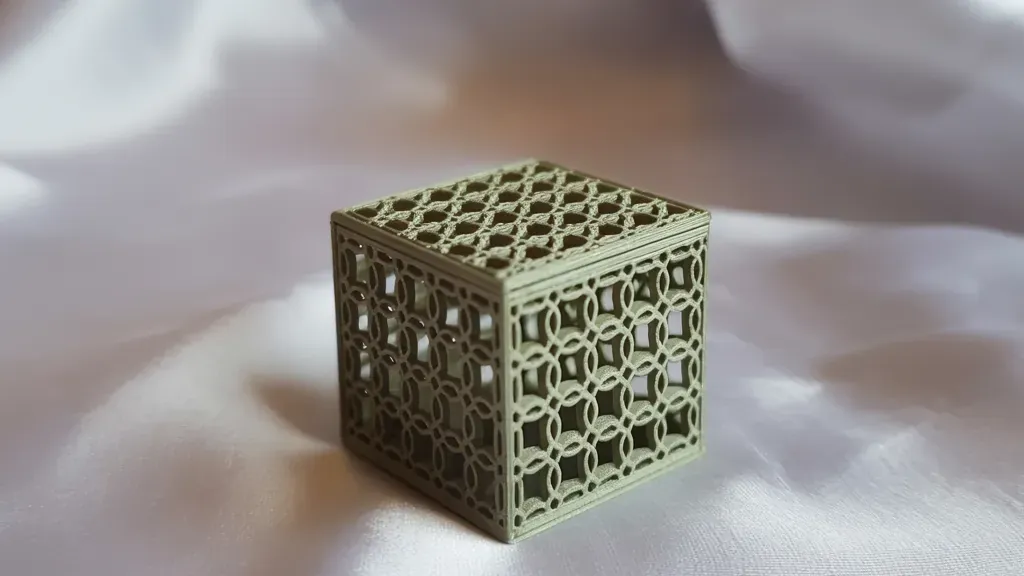
Past roughly 10 to 15 identical parts, one printed master plus a silicone mould usually beats printing the whole run. BigRep's guide puts a silicone mould taken off a printed master at 50 to 200 casts, freeing the printer for the next job. Below 10 parts, printing each one directly is normally quicker.
The route is old and the only new part is where the pattern comes from. We print the master on FDM or SLA, sand and seal it, build a box around it, pour silicone, pull the master out once it cures, then cast polyurethane resin into the rubber as many times as the mould survives. In Dubai, that covers exhibition badges, 40 or 60 product dummies for a retail activation, repeated rosettes for an interior, or a prop tough enough that spares make the brief.
Printing a batch with no tooling at all is a different path, covered in our piece on packaging prototypes before tooling. This page stays on the casting route: one printed pattern, one rubber mould, a stack of copies.
When does casting from a printed master beat printing the batch?
Quantity is the first filter, geometry is the second. Printing stays cheaper and simpler when:
- Two or three copies never pay back the silicone, the mould box and the half day of pattern prep.
- A 600 mm sculpture section needs a mould box bigger than itself and many kilos of silicone, so it is usually printed in sections and bonded instead.
- Any design change means a new master and a new mould, and the rubber already bought is scrap.
- Numbered plates, per-guest names, size variants: the printer handles variation for free, a mould cannot.
Casting earns its keep when the part count climbs and the shape stays frozen:
- Fifteen to a hundred-odd identical parts in resin or plaster.
- Fine surface detail that would otherwise need sanding and priming on every copy gets done once, on the master, and every cast inherits it.
- Parts thinner or more delicate than the printer likes, where a filled resin casting comes out tougher than a thin printed shell.
- Repeat orders: the mould sits on the shelf, and the second batch starts the week the client asks, no reprint queue.
Around 10 to 20 parts either route works, and the finish decides: visible layer lines, we print; a moulded look, we cast, since sanding 20 printed parts smooth costs more hours than making one mould.
How do you design the master so the mould comes off it?
The pattern decides how hard the next twenty casts will be, so the file gets reviewed for mould release before it goes near a printer.
The parting line goes on a plane of symmetry wherever the shape allows one. A flat back, a base, a waistline on a figure. Put the seam elsewhere and the flash line lands on a visible face, meaning knife work on every cast.
Draft comes next. Vertical walls release from silicone because the rubber flexes, but a wall leaning inward even a degree fights you, and it fights harder with every cast as the rubber takes a set. One to two degrees of taper away from the parting line costs nothing in the CAD.
Undercuts are what force a two-part mould. A lug on the side of a body, a handle that loops back, a flange wider than the section below it, a deep recess with a lip. Soft silicone peels off small undercuts happily. Deep ones tear, and the tear turns into a flash line on every part after it.
The master also needs somewhere for resin to go in and air to come out. We often print a short cone on the pattern's base for a pour spout, and on two-part moulds we print registration keys into the flange instead of cutting them into cured rubber by hand. Hand-cut keys drift. Printed keys sit in the same place every time the halves close.
FDM or SLA for the silicone mould master?
FDM leaves 0.2 to 0.4 mm layers and silicone copies them exactly. Sinterit's case study measured FDM at roughly 10 to 25 µm Ra against 1 to 5 µm Ra for SLA, and that gap shows up on the cast as much as on the pattern. So an FDM master gets sanded, normally 400 grit up to around 1000, then sealed with one or two coats of filler primer to close the porosity between beads. Skip the sealing and the silicone picks up that texture, which transfers to every copy. FDM still makes sense on large masters and early iterations we expect to reprint.
SLA prints at 25 to 50 µm layers and the surface arrives close to finished. We dress the support scars, scuff the contact faces, and the rest usually needs nothing. Where relief, lettering or an engraved logo has to land in the casting, SLA is the honest answer: whatever the resin resolves, the rubber picks up. Jewellery work pushes it further: AmeraLabs' tutorial on printed masters takes the pattern from 400 grit to 3000 before the pour, since a mirror master gives a mirror cast with no polishing on the copies.
The grits and primers themselves are the same ones in our piece on finishing a 3D print. A master gets taken further than the part it stands in for, since every flaw multiplies by the cast count.
One-part or two-part mould?
A one-part block mould is a box of silicone with the pattern sunk in it and one open face: quick, cheap, no seam, and it only works when the part pulls straight out. Flat-backed badges, reliefs, plaques, decorative tiles, anything with a clean base.
A two-part mould is what undercuts force. The pattern sits half-buried, the first half of silicone cures, keys and a release layer go on, then the second half pours over the top. At casting time the halves clamp together, resin goes in through the spout and air leaves through the vents. The seam is what you pay for: every cast comes out with a thin flash line along the parting line that someone trims and sands. On a batch of 50 that adds up, which is why parting-line placement matters more than people expect.
The glove mould, a thin silicone skin backed by a rigid shell, belongs to larger decorative pieces where a solid block of rubber would cost more than the whole job.
What silicone and what casting material?
Platinum cure (addition cure) barely shrinks, under 0.1% by Smooth-On's figures, and its mould shelf life runs decades against as little as 12 months for some tin-cure rubbers. It is fussy about contamination: uncured resin, sulphur-bearing clay and some tapes inhibit the cure and leave a sticky patch, so we test a thumbnail of silicone on a scrap corner before committing to a full pour. Tin cure is cheaper, more forgiving, and fine when the mould only has to outlive one batch.
Hardness changes mould behaviour more than people expect:
- Shore A 20 to 25 for parts with undercuts and fine detail, because soft rubber peels back off a lug instead of tearing.
- Shore A 40 to 50 under thin walls, tall shapes and long flat panels, where soft rubber sags and the cast comes out bowed.
On the casting side, polyurethane resin is the workhorse for brand samples, props and display parts: it takes paint well and fills thin sections cleanly. Epoxy gives a harder part with sharper edges but runs hotter during cure, shortening mould life, and plaster stays cheap, heavy and kind to the rubber for solid decorative shapes. Mould life itself comes as a range rather than a number: BigRep's guide quotes 50 to 200 parts from a printed-master mould, Prusa's notes 30 to 50 with a hard epoxy or urethane, and heat of cure, sharp detail and rough demoulding all pull the count down.
How do you keep bubbles out of the casts?
Air gets into the job when the silicone is mixed, and again when the resin is poured, so it gets dealt with at both points.
For the mould, mixed silicone goes into a vacuum chamber so trapped air expands and breaks at the surface, then it is poured in a thin stream into the lowest corner of the box, shedding bubbles on the way down. For the casting, a pressure pot during cure squeezes whatever air is left until the bubbles are too small to read on the surface.
Shop temperature matters here, and in a Dubai workshop it matters in summer. Warm rubber and warm resin both kick faster, so pot life shrinks exactly when you want the extra minute for a careful pour. We mix smaller batches when the shop is hot and plan the pour sequence before anything gets opened.
What moves the price and the calendar
There is no rate card for this, because the same part count can be a one-day job or a two-week one. What we price against:
- Size of the part, and therefore the volume of silicone, usually the single biggest line.
- One-part or two-part mould, and whether the geometry needs a glove mould instead.
- Master finish level: a 3000-grit pattern takes hours a 400-grit one does not.
- Number of casts, and whether they come from one mould or several run in parallel.
- Finishing on the copies: trimming flash, filling pinholes, priming, painting, assembly.
- Whether the geometry is signed off, since repeat moulds after a design change are the most common way this route gets expensive.
Timelines depend on cure cycles more than machine time: silicone, resin and paint all cure in series, and rushing any of them costs surface quality. Send the file and quantity through the contact form and we will say which route fits.
FAQ
How many parts do I need before a silicone mould is worth it?
Around 10 to 15 identical parts is usually where the arithmetic flips, earlier if the finish has to look moulded rather than printed. Below that, pattern prep and mould cost more than just printing each copy.
Can an FDM master give a smooth cast?
Yes, after sanding and sealing. Raw FDM sits around 10 to 25 µm Ra, so the pattern gets sanded to roughly 400-1000 grit and sealed with filler primer before the pour.
How many casts will one silicone mould give?
Widely cited guides put it at 50 to 200 parts from a printed-master mould, fewer with a hard epoxy or urethane casting resin or rough demoulding. For a long run, we plan a second mould from the same master rather than gamble on the first.
Do I need a two-part mould for my part?
Only if the geometry traps the part in the rubber: side lugs, return handles, wide flanges, deep lipped recesses. Send the model and we will mark where the parting line falls and what it costs in flash cleanup.
Which printing technology should the master use?
SLA when relief, engraving or small text has to survive into the casting. FDM for large or still-changing masters. The decision gets made per part, not once per project.
Supplier figures quoted here were current as of November 2026, and silicone datasheets get revised, so check the sheet that ships with your material. To talk through a part, send the model through our workshop contact page and say how many copies the job needs across the UAE.