FDM, SLA or SLS: which 3D printing technology fits your project
Most people who come to us do not care which machine prints their piece. They care how it will look, whether it will hold and when it will be ready. The technology follows from those answers. We print with FDM, SLA and other technologies. Three of them cover most briefs: FDM, SLA and SLS. Each has a clear strength and a clear weakness.
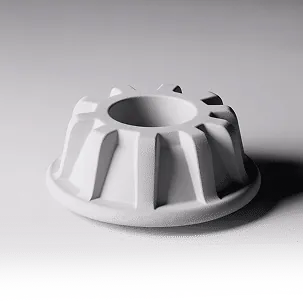
FDM: scale and structure
FDM melts a plastic filament and lays it down line by line, layer by layer. It is the most common technology and the one that scales. Large sculptures, furniture, exhibition pieces and anything printed in sections start here.
The price you pay is the surface. Layers are visible, more so on shallow curves, and details smaller than a millimetre get lost. Sanding, primer and paint fix the surface when the design calls for it.
Strength depends on direction. An FDM part is strong along the layers and weaker across them, so the position on the bed is chosen with the load in mind.
SLA: fine detail and a smooth surface
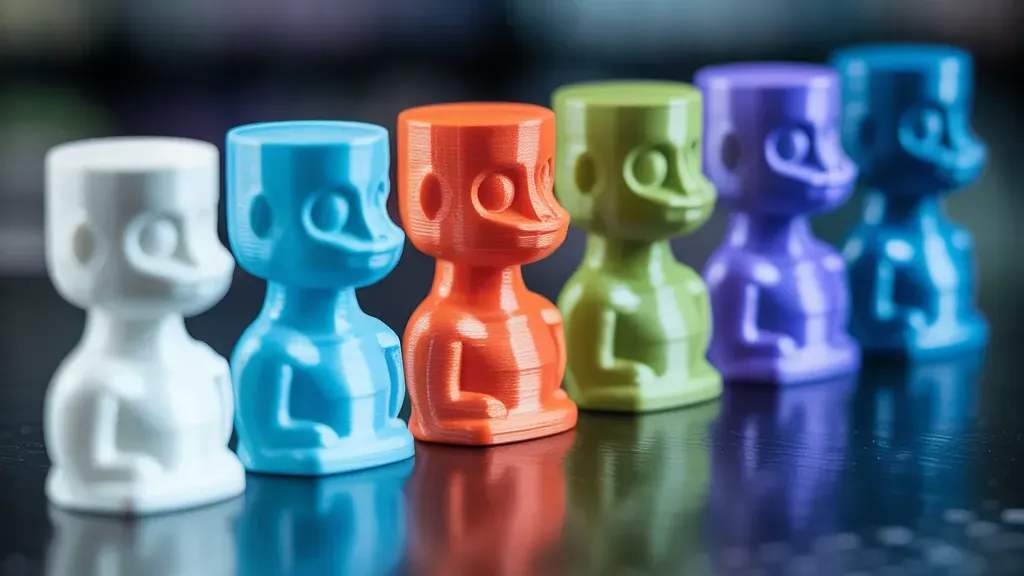
SLA cures liquid resin with light. The layers are so thin that the eye does not pick them out, and the machine holds details that FDM cannot: lettering, the face of a figurine, thin ornament. This is the choice for jewellery masters, figurine prototypes, small architectural details and anything that will be looked at from thirty centimetres away.
Resin parts are more brittle than FDM or SLS parts, and standard resins do not like long exposure to direct sun. Size is limited too. SLA is for objects you can hold in your hands.
SLS: working parts without supports
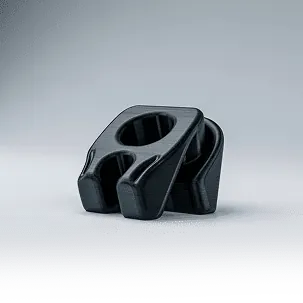
SLS fuses nylon powder with a laser. The loose powder around the part holds it up during printing, so there are no supports and nothing to cut away afterwards. That allows shapes the other two struggle with: internal channels, interlocking parts, hinges printed in one piece.
SLS parts are strong in every direction and cope with real use: clips, housings, brackets, moving assemblies. The surface is matte and slightly grainy, like fine sandpaper. It takes dye and paint well, but it will not come out glossy without extra work.
Side by side
| FDM | SLA | SLS | |
|---|---|---|---|
| Best for | Large pieces, structure | Small detailed pieces | Working parts |
| Surface | Visible layers, smooth after finishing | Smooth straight from the machine | Matte, fine grain |
| Fine detail | Moderate | High | Good |
| Strength | Good along the layers | Brittle | Good in every direction |
| Size | Small to very large, in sections | Small | Small to medium |
| Supports | Needed on overhangs | Needed, leave small marks | Not needed |
Typical briefs
A sculpture for a lobby, two metres tall. FDM in sections, then filler, sanding and paint.
A series of collectible figurines. SLA for the prototypes, because faces and small details decide everything.
A scale model of a tower. Often both: FDM for the base and the main volume, SLA for the facade details.
A bracket or housing that has to work. SLS, or FDM if the shape is simple.
A stand for a three day exhibition. FDM. It is fast and light, and the budget goes into finishing.
One piece, several technologies
Nothing says a project has to use one machine. The body can be FDM, the fine details SLA and the hinges SLS, all assembled and painted as one object.
When you send a brief, describe what the piece has to do and where it will live. Picking the technology is our part of the job. If you already have a file, check it against our list before sending.